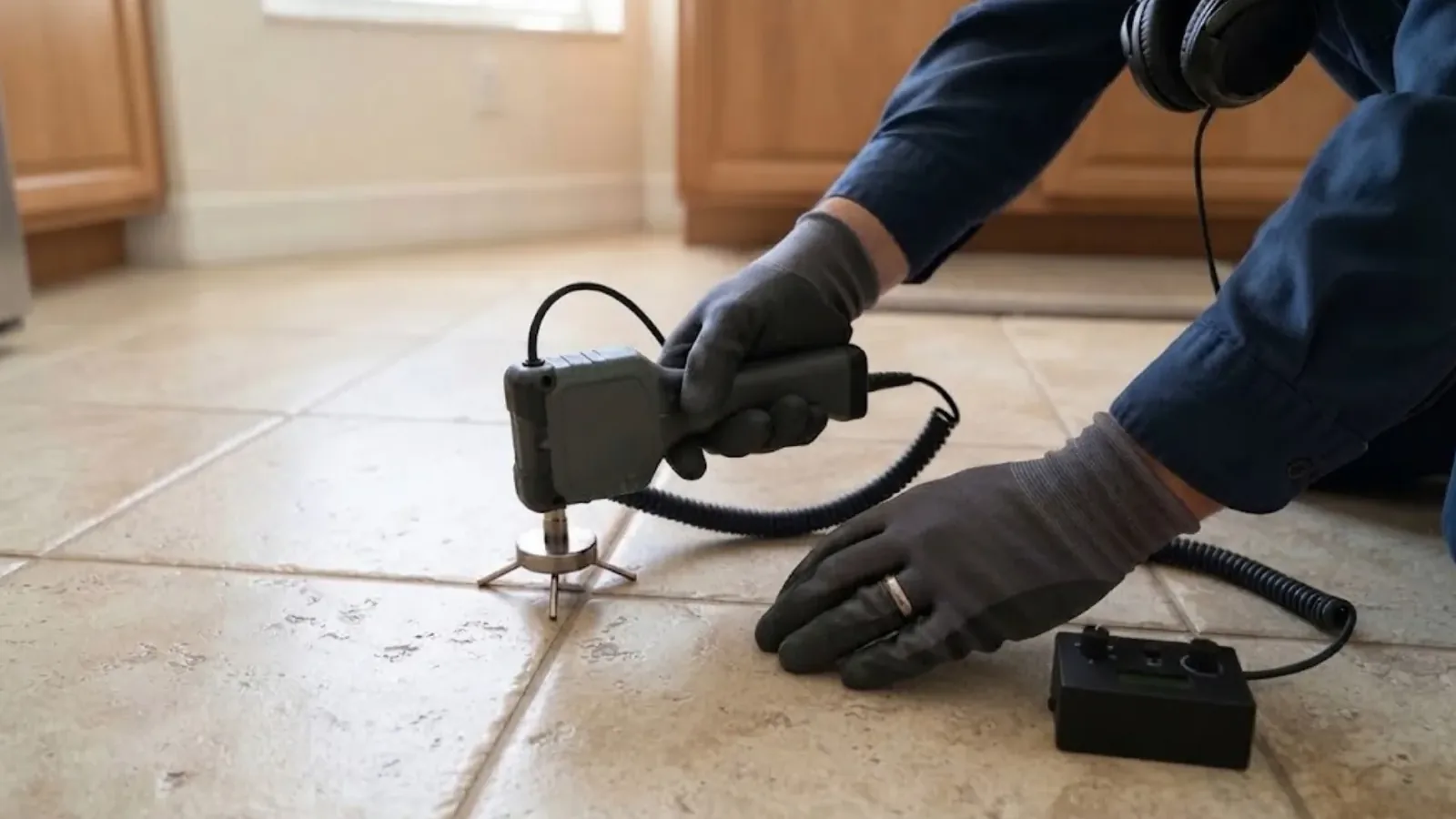
What leak detection involves
Leak detection finds where water is escaping before anything is opened up. The plumber starts with a pressure check and a meter test, then narrows the search with listening gear, thermal imaging and tracer methods that fit the pipe and the location.
The goal is a small, exact repair instead of a large demolition. Once the leak is found, the repair is quoted before work starts, and larger jobs such as a buried service line move to water line repair.
Active leak: what to do now
Find the main shutoff, usually near where the water line enters the house, and turn it off. Open a faucet at the lowest point to drain the pressure.
If water has reached outlets, light fixtures or appliances, stay off wet floors and shut off the breaker only if you can reach the panel without standing in water. Photograph the damage for insurance and call.
The meter test you can do yourself
Turn off every fixture and appliance, then look at the water meter. If the small leak indicator spins or the numbers move with nothing running, water is escaping somewhere on your side of the meter.
Write down the reading, wait an hour with all water off and check again. If the number changed, the leak is real, and the next question is whether it is inside the house, under the slab or in the yard.
Signs of a hidden leak
A high water bill with no change in habits
A running toilet or a small pipe leak can waste thousands of gallons a month.
The meter moves with everything off
The clearest sign of a leak between the meter and the fixtures.
Warm spots on a slab floor
A hot water line leaking under concrete can warm the surface above it.
Stains or bubbling paint on a ceiling or wall
Water traveling along a joist or pipe shows up away from the source.
The sound of running water at night
A hiss in the walls with every tap off is a leak signature.
A soggy patch of lawn or a green stripe
A buried line leaking can soak the soil in a line above the pipe.
Musty odor or visible mold
Hidden moisture grows mold in wall cavities and under flooring.
Wet spot with no source?
Call the 24/7 line. A plumber can locate the leak without opening walls first.
Where leaks hide and how they are found
| Location | Common cause | How it is found |
|---|---|---|
| Under a slab | Pinhole in a hot or cold line | Pressure test, acoustic listening, thermal imaging |
| In a wall or ceiling | Joint failure, nail through a pipe | Moisture meter, thermal camera, a small access cut |
| Under the house (crawl space) | Corroded fittings, a failed supply line | Visual check and a pressure test |
| Buried service line in the yard | Corrosion, root pressure, ground movement | Meter test, acoustic locating, tracer gas |
| Irrigation or pool line | A cracked valve, a frost-damaged pipe | Zone isolation and a pressure test |
| Fixtures and appliances | Worn seals, failed supply hoses | Dye tests and visual inspection |
Slab, wall and ceiling leaks
Slab leaks are among the hardest to catch because the pipe is buried in concrete. A warm floor spot, a hissing sound or a bill spike are the usual clues, and the plumber confirms the leak with a pressure test before locating it.
Ceiling and wall stains are tricky because water travels. A stain in one room can start in a bathroom or attic far from the visible mark, so the plumber traces the path with a moisture meter and a thermal camera rather than cutting the first stained spot.
Irrigation, pool and yard lines
Many Caldwell properties have a separate irrigation system, and some are on the pressurized irrigation service run by the Caldwell Municipal Irrigation District rather than city drinking water. A leaking valve or a frost-cracked pipe in that system wastes water and floods the lawn.
The plumber isolates each zone and tests the pressure to find the line at fault. A pool plumbing leak is tested the same way, with the pool lines isolated one at a time.
Rental, multifamily and commercial buildings
Property managers often call about a building where the meter keeps running but no tenant reports a leak. In a multifamily or commercial building the search starts by isolating each unit or branch, then testing the underground lines between them, which is faster than opening walls unit by unit.
Fire lines and large service lines need locating gear that suits bigger pipe, so say what the building has when you call. The business side of the work, including grease and backflow, is covered under commercial plumbing.
What decides the price of leak detection
Locating a leak is priced by the visit, and the repair is quoted separately once the leak is found.
Many policies cover sudden water damage but not the pipe itself or a slow leak, so ask your insurer about both before a claim.
Leaks, your water bill and the city meter
The City of Caldwell's water ordinance makes the owner responsible for leaks in service pipes and fixtures on the property side, and says wasteful leaks should be fixed within 60 days of being notified by the city. Meters are city property.
The city's utility billing policy says it does not adjust a bill for excess water from a leak, with narrow exceptions such as a line break or failed parts on the city side of the meter. If you believe an exception applies, utility billing is at (208) 455-3000, option 1. Finding and fixing a leak early is the best protection for your bill.
Once the leak is found, a split pipe is repaired as described under burst pipe repair, and plumbers make the same visits in Middleton.
Finding a leak is not code work, but the repair that follows is, and Idaho applies the 2015 Uniform Plumbing Code (UPC) with its own amendments to it.
Source: City of Caldwell Utility Billing and water ordinance pages
How a leak detection visit runs
Shut off and test
The plumber turns off fixtures, reads the meter and runs a pressure test on the house lines.
Narrow the search
Listening gear and thermal imaging pick the area, then the exact spot.
Mark and quote
The leak is marked and the repair price is given before any digging or cutting.
Repair and dry out
The line is fixed, tested and, if needed, you get next steps for drying and repair.
Leak detection questions in Caldwell
Yes. A leak that is actively wetting floors or ceilings is urgent at any hour, and the line is answered 24/7. The dispatcher books the earliest visit available.
Close the main shutoff valve, turn off the power to wet areas at the panel if you can reach it safely, and move belongings out of the water.
Add a few drops of food coloring to the tank and wait 15 minutes. If color shows in the bowl, the flapper is leaking. See toilet repair for the fix.
Most of the search is noninvasive. Only a small access hole is cut once the leak is pinpointed, and the plumber explains where before cutting.
A running toilet, a dripping irrigation valve or an underground leak are the common causes. A meter test with everything off tells you whether water is leaking.
Yes. Each zone or pool line is isolated and pressure tested until the failing section is found.
Policies differ. Many cover damage from a sudden leak but not the cost to find or repair the pipe, so check yours and ask for documentation from the plumber.
No. The owner is responsible for pipes on the property side of the meter. If you suspect a leak on the city side, call the City of Caldwell water department.