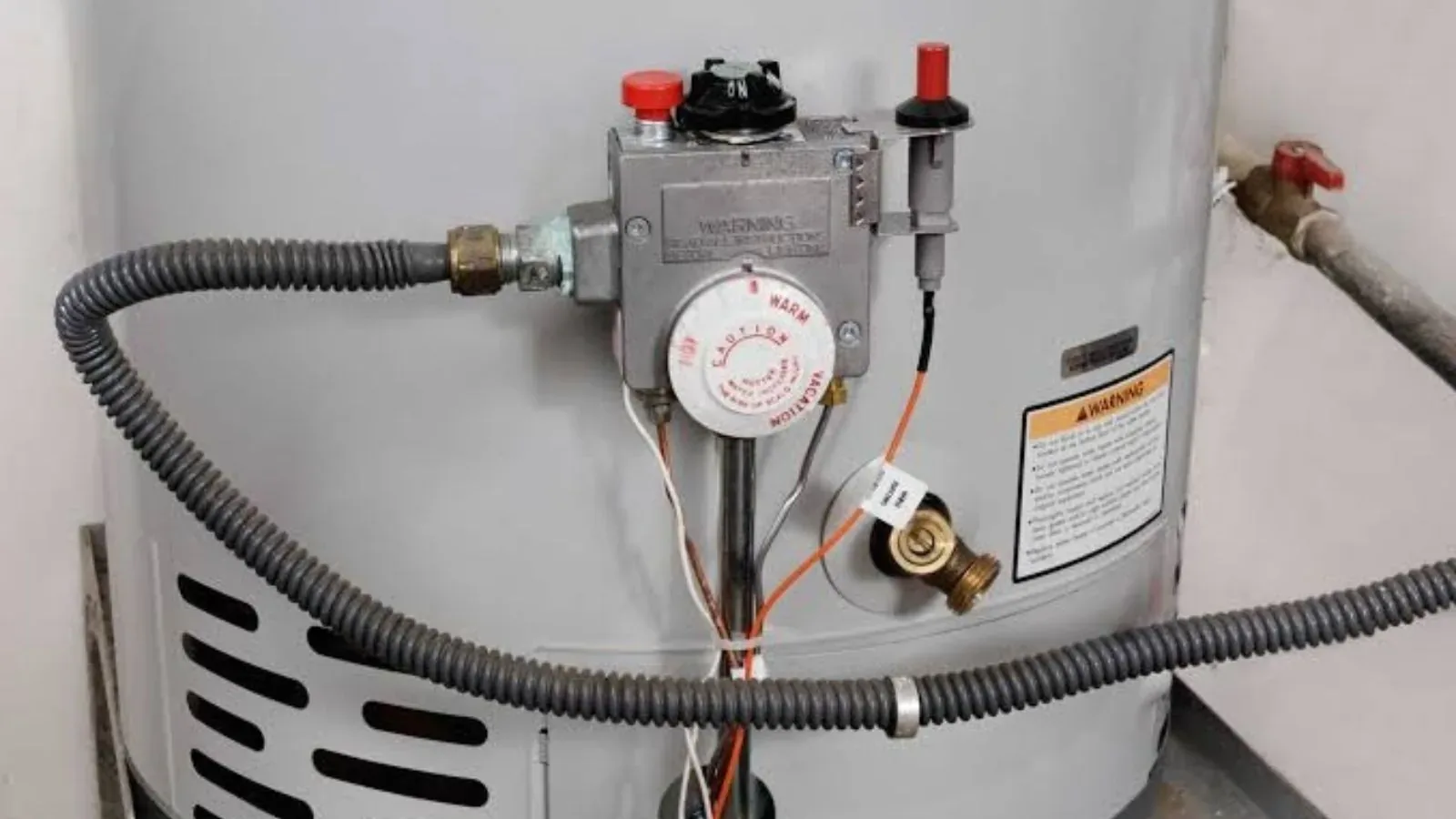
What a water heater repair involves
A water heater repair finds the failed part and replaces it, then tests the unit for leaks, heat and safe venting. The usual culprits are heating elements, thermostats, gas control valves, thermocouples, igniters, relief valves and dip tubes.
A good repair visit starts with a diagnosis, not a parts guess. The plumber checks the tank for leaks first, since a leaking tank changes the repair-or-replace answer and a flame-related fault changes the safety steps.
Symptoms and what they usually mean
Callers describe the same handful of problems again and again, so the list below follows the way the symptoms show up at home.
No hot water at all
On an electric unit, a tripped breaker, failed upper element or bad thermostat is common. On gas, a pilot that went out, a worn thermocouple or a gas control fault is more likely.
Lukewarm water
A burned-out lower element, a broken dip tube or a thermostat set too low often explains hot water that runs out fast.
Popping or rumbling
Scale and sediment on the tank floor trap steam bubbles that burst as the burner or element heats. Flushing can help if the tank is young.
Pilot will not stay lit
A dirty pilot tube, bad thermocouple or draft in the vent can drop the flame. Gas smells are never a do-it-yourself job.
Water around the base
A loose fitting or relief valve can leak and be fixed. A seam leak from the tank itself means replacement.
Rusty or smelly water
A tired anode rod or bacteria in a warm tank can cause color and odor. The plumber tests before recommending a part.
No hot water and a leak: what to do first
If water is coming from the tank, the order matters. Close the cold water valve above the heater, cut power at the breaker or turn the gas valve handle, and open one hot tap to take pressure off the tank.
If you smell gas, do not touch switches or phones inside. Leave, call 911 and the gas utility from outside, and then call us once everyone is safe.
Water heater leaks: where the water is coming from
A leak can start at five places, and only one of them ends the tank. Water at the top points to the cold or hot line fittings or to the anode rod port. Water dripping from the relief valve discharge pipe means pressure or temperature is too high, or the valve has worn out.
Water from the drain valve at the bottom is usually a loose valve or a bit of sediment holding it open. Water that leaks through the jacket or from under the base, often with rust streaks, is the tank liner failing, and repair will not hold.
Gas, electric and hybrid units compared
| Heater type | Frequent faults | Safety note |
|---|---|---|
| Gas tank | Thermocouple, gas control valve, pilot assembly, flue draft | Gas smell means leave and call 911 first |
| Electric tank | Upper and lower elements, thermostats, high-limit reset | Cut the breaker before opening any panel |
| Hybrid heat pump | Condensate drain clog, air filter, sensor faults | Needs open air space and a working drain |
| Tankless | Scale on the heat exchanger, error codes, vent or gas supply | See tankless water heaters for flush and descale |
Hot water gone or a tank leaking?
The line is open all night and all weekend. Call and a plumber is dispatched with the earliest slot available.
What changes the cost of a repair visit
Prices vary because a repair can be a ten minute reset or a two hour part swap. You hear the price before the work starts.
If a leak damaged a ceiling or floor, homeowner insurance may cover the water damage from a sudden leak but not the heater itself.
Hard water, permits and the Caldwell water system
Caldwell's municipal water comes from groundwater wells, and the city's annual reports for 2024 and 2025 give no hardness number. Scale shows up as popping tanks and weak flow, so a hardness test strip from the hardware store tells you more than a guess. The Water Department answers questions at 208-455-3070.
Idaho states that a permit is required when plumbing work is performed. A simple part swap is not the same as replacing a tank, so ask the plumber whether the job needs one before work starts.
A heater that cannot be repaired moves to water heater replacement, and repair visits are available in Middleton too.
Repairs that touch the gas, vent or water connections fall under Idaho's state plumbing code, the 2015 Uniform Plumbing Code (UPC) with Idaho amendments, so ask the plumber whether your visit needs a permit.
Source: Idaho DOPL Plumbing Bureau FAQ and the City of Caldwell Water Department annual reports
A repair makes sense when the tank is young
A tank under about eight years old with a bad element or thermostat is usually worth fixing. A tank past ten years with rust at the base is not. The plumber reads the data plate and tells you which side of the line you are on.
If the unit has to go, the same visit can be converted to a water heater replacement, and the earlier diagnostic time is not lost.
How the visit runs
Safe shutoff
Power or gas is secured and the tank is checked for leaks, scorching and rust.
Diagnosis
Voltage, gas pressure, thermostat settings and the relief valve are tested in order.
Repair and test
The failed part is replaced, then the unit is brought up to temperature and checked again.
Plain advice
You hear whether the tank has years left or whether a replacement is the better spend.
Water heater repair questions in Caldwell
Yes. Calls are answered 24/7, including weekends and holidays. A leak at the tank or a gas smell is urgent, and the dispatcher books the earliest visit available.
For a gas smell, leave the home and call 911 and your gas utility before you call us. For a plain loss of hot water, switch off power or gas and wait for the plumber.
A failed lower element, a broken dip tube that sends cold water to the top, or a tank thick with sediment can all cut the hot water supply. The plumber tests each in turn.
Only if the manufacturer's instructions on the tank are clear and you smell no gas. If the pilot will not stay lit, the cause is usually a failing thermocouple or a draft, and a plumber should look at it.
It is usually bacteria reacting with the anode rod in a warm tank, not a danger by itself. It can often be cleared with a flush and an anode change, but a plumber should test first.
Scale and sediment on the tank floor trap steam. A flush often quiets a young tank, while an older tank with heavy scale may need replacement.
The city's published reports for recent years list no hardness number, so test your own tap. Scale shortens the life of any heater, and a flush each year slows it.
Yes for common faults like scale, error codes and drain clogs. For flush schedules and descaling, read about tankless water heaters.