How a tankless heater works and what it needs
A tankless heater fires a burner or energizes elements only when a hot tap is open. Cold water passes through a heat exchanger and leaves hot, in a steady stream, until the flow rate exceeds what the unit can heat.
That is why the sizing and the supply lines matter. A gas model needs a gas line sized for its high input, a vent that can carry the exhaust, and a way to drain the condensate. An electric model needs heavy electrical service that many older panels cannot supply.
Tank versus tankless in a Caldwell home
Standard tank
- Lower purchase price and a simple swap
- Keeps a reserve of hot water ready
- Standby loss while it holds the heat
- Roughly 8 to 12 years of service
Tankless
- Higher price and more prep work
- Heats on demand without a reserve
- Saves floor space inside a garage or closet
- Often listed for 15 to 20 years with upkeep
Flushing and descaling: the service most units miss
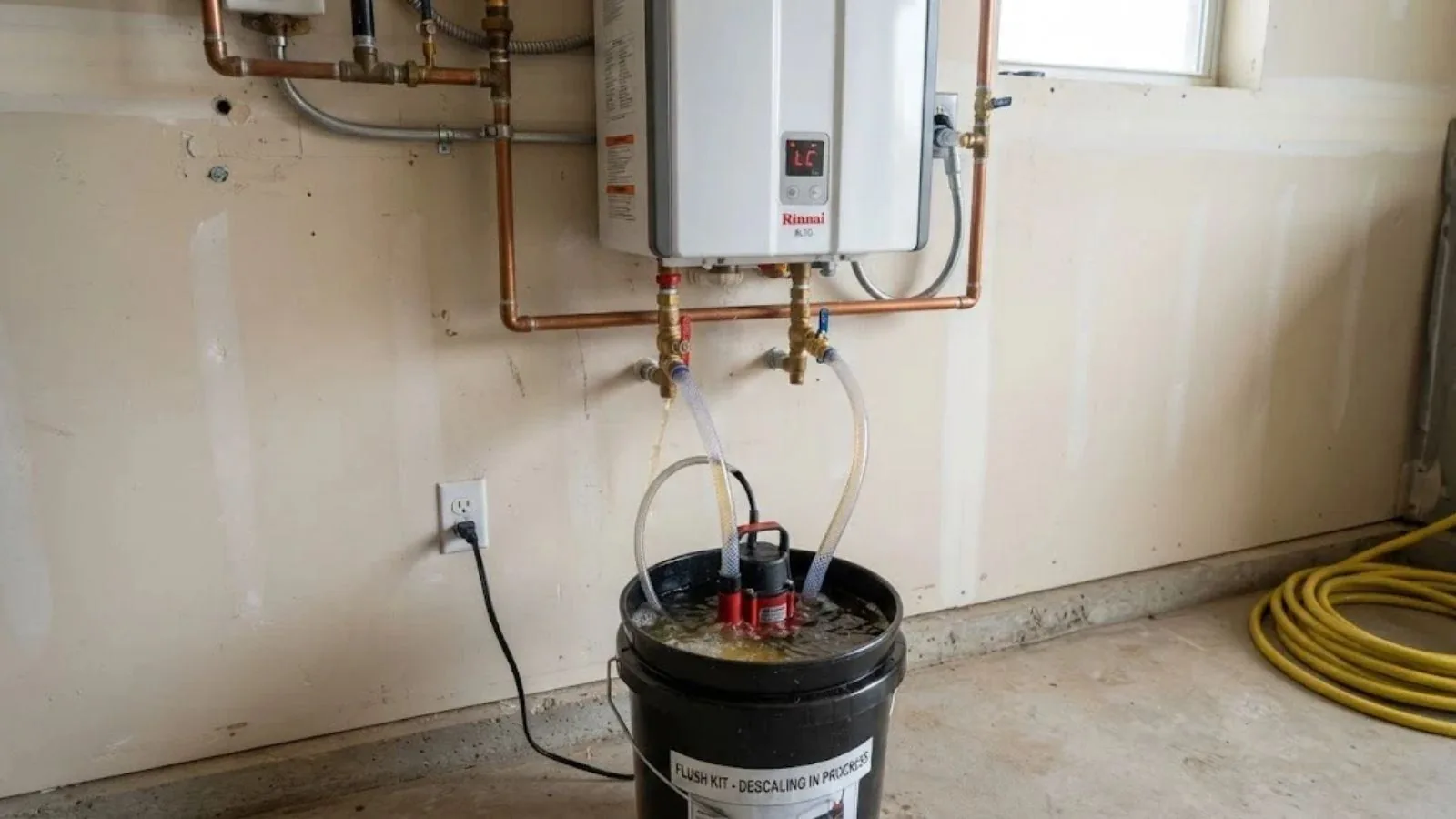
Scale builds on the heat exchanger and narrows the water path, so the unit works harder and throws error codes. A descale flush runs a mild acid solution through the exchanger with a small pump, then rinses it clear.
Many manufacturers call for a flush about once a year, and sooner in hard water. Caldwell's annual water quality reports for 2024 and 2025 do not list a hardness figure, so a test strip on your own tap tells you how fast scale is likely to grow.
Signs your tankless heater needs service
Error codes on the display
Scale, a clogged inlet screen, a venting fault or low gas pressure can each trip a code. The code and the model number speed the diagnosis.
Water runs cold then hot
A clogged inlet filter, scale in the exchanger or a flow sensor fault can cause cold sandwich swings.
Weak hot flow
A fouled exchanger or an undersized supply line reduces output. Flushing often restores it.
Banging or a fan that screams
A worn fan motor, a blocked vent or an exchanger choked by scale makes the unit loud.
Unit shuts down mid shower
Overheat sensors trip when flow is too low or scale is heavy. A flush usually clears it.
Pilot or ignition failures
On gas models a dirty burner, a failing igniter or a low gas supply can stop ignition.
Unit throwing a code or running cold?
Call and the dispatcher books a plumber who works on tankless heaters.
Gas line and venting: the part that decides the install
A gas tankless heater draws far more fuel at once than a tank heater, and the old gas line is often too small. The plumber measures the run, counts the other appliances on the line and sizes the pipe accordingly.
Venting is the other gate. Some units use PVC or stainless through a wall, and some need a roof termination. The vent route, the clearances and the condensate drain are set before the unit is ordered, not after.
What drives a tankless quote
Tankless jobs vary more than tank swaps because the house decides so much of the work.
Intermountain Gas lists a residential tankless rebate that requires a minimum 0.91 UEF rating, with an application due within 90 days of install. Terms change, so confirm before buying.
Winter freezing, permits and rebates in Caldwell
NOAA normals for the Nampa station, about seven miles east of Caldwell, show about 132 days a year with a low at or below 32 degrees F. A tankless heater mounted on an exterior wall or in an unheated garage needs freeze protection and a condensate line that cannot freeze.
Idaho's Division of Occupational and Professional Licenses says a permit is required when plumbing work is performed. For a gas install, ask the plumber who pulls the permit and what inspection follows.
Hard water shortens a tankless unit's life, which is where water softener installation comes in, and installs are also done in Middleton.
Source: NOAA NCEI 1991 to 2020 normals and Idaho DOPL Plumbing Bureau FAQ
When replacement beats repair
A tankless unit under ten years old with a code history of scale is usually a flush and a sensor swap. A unit with a cracked exchanger or years of unmaintained scale may not be worth the repair bill.
If a tank is failing instead, emergency water heater replacement covers the urgent case, and water heater repair handles gas and electric tanks.
How a tankless service visit runs
Diagnose
The plumber reads the code, checks gas pressure or voltage and inspects the inlet screen.
Flush
The exchanger is flushed with a descaling solution and rinsed clean.
Test
Flow, temperature and venting are checked under load.
Advise
You get a maintenance schedule matched to your water.
Tankless water heater questions in Caldwell
Many manufacturers call for about once a year. Hard water or heavy use calls for sooner, and the plumber can set a schedule from a test of your tap water.
It can be, for households that run out of hot water or want floor space back. The higher price and gas or electric upgrades should be weighed against the saved space and longer service life.
Yes with freeze protection, a condensate drain that cannot freeze and insulated lines. NOAA normals show about 132 freezing days a year nearby, so planning matters.
Often not without an upgrade, since a tankless heater draws far more gas at once than a tank. The plumber measures the run and counts the other appliances before quoting.
Its website lists a residential tankless rebate for units meeting a minimum 0.91 UEF efficiency rating, with a 90 day window to apply after install. Terms change, so confirm them first.
Yes, though the vent, gas line and electrical needs are reviewed first. See water heater installation for the planning steps.