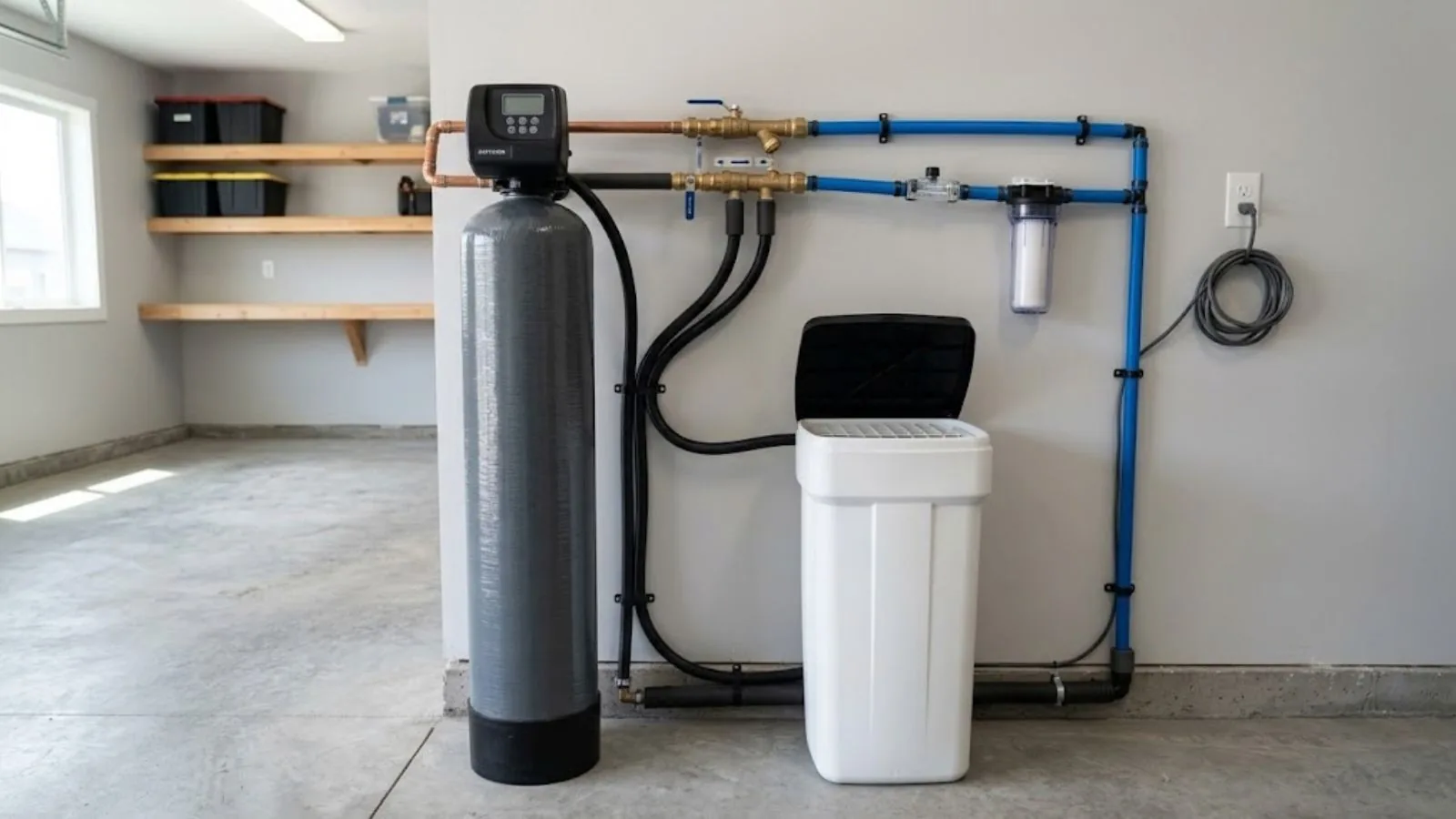
What a water softener does
A softener swaps calcium and magnesium, the minerals that make water hard, for sodium or potassium as water passes through a resin bed. Over time the resin loads up, and the unit flushes itself with brine to recharge.
Hard water leaves scale in water heaters, fixtures and pipes and shortens appliance life. A softener helps with all of those, but it is not a drinking water filter and does not remove most contaminants.
Test before you buy
Hardness varies from tap to tap and from well to well, and published water reports do not always list it. The City of Caldwell's water department can say what it reports for your area, and a low-cost test kit or lab test gives you a number for your own tap.
Sizing a softener to a number is far better than guessing. A unit that is too small regenerates constantly, and one that is too large wastes salt and water.
Common softener types
| Type | How it works | Notes |
|---|---|---|
| Salt-based ion exchange | Resin swaps hardness minerals for sodium or potassium | The standard approach, needs salt and a drain |
| Dual tank | Two resin tanks alternate | Soft water never pauses, larger footprint |
| Salt-free conditioner | Changes how minerals form scale | Reduces scale but does not truly soften |
| Whole-house filter | Removes sediment or chlorine | Different goal, often paired with a softener |
Want a sizing visit?
Call and a plumber will talk through the household, the water test and the best place for the unit.
Where it goes and what it connects to
A softener is installed on the main water line after the shutoff and before the water heater, with a bypass so the house can run on untreated water during service. It needs a drain for regeneration water, an air gap and a power outlet.
Outdoor taps are usually left on untreated water to save salt. The plumber also checks that the drain connection meets code, which ties to the plumbing installation work around the unit.
Taking care of a softener
Keep the brine tank at least a third full of the right salt, and check for salt bridges that block the cycle. Once or twice a year, the plumber can sanitize the resin bed, check settings and inspect the bypass valve.
A softener can also help protect a water heater from scale. See water heater repair for what scale does to a tank and element.
What changes the price of a softener installation
The total is the unit plus the labor, and the plumber quotes it before the work starts.
Ask for the salt type, the regeneration schedule and the expected water use in writing so you can budget for upkeep.
Caldwell water and local rules
The City of Caldwell water department supplies drinking water from groundwater wells and publishes annual water quality reports. Not every report lists hardness, so a test at your own tap is the best way to get a number. The department is at 208-455-3070.
Some Caldwell homes are on pressurized irrigation run by the Caldwell Municipal Irrigation District, which is a separate system from drinking water. A softener belongs on the drinking water line, not on the irrigation supply. Idaho requires a permit for plumbing work, so ask the plumber who pulls it.
Softeners often follow a water heater installation, and the crews work in Middleton as well.
Source: City of Caldwell Water Department and Idaho DOPL Plumbing Bureau FAQ
How an installation runs
Test and size
Water is tested and the unit is sized to the household.
Plan the location
The plumber picks a spot with a drain, power and room.
Install and connect
The unit is tied in with a bypass and a drain line.
Set and teach
The control head is programmed and you learn the salt and bypass routine.
Water softener questions in Caldwell
That depends on your water. The city does not list hardness in every report, so test your tap or ask the water department before you decide.
Softened water adds a small amount of sodium or potassium. People on low sodium diets should talk to a doctor, and many homes leave one kitchen tap unsoftened.
Most households add salt every few weeks. Check the brine tank monthly and keep it at least a third full.
No. Softeners belong on the drinking water line. The irrigation system is a separate supply.
Not directly. Scale buildup in old pipe may contribute to low pressure, but a softener only prevents more, and a regulator or repiping may be the real fix.
A standard install takes a few hours. The water is off for part of that time, and the plumber tells you how long.