What plumbing installation covers
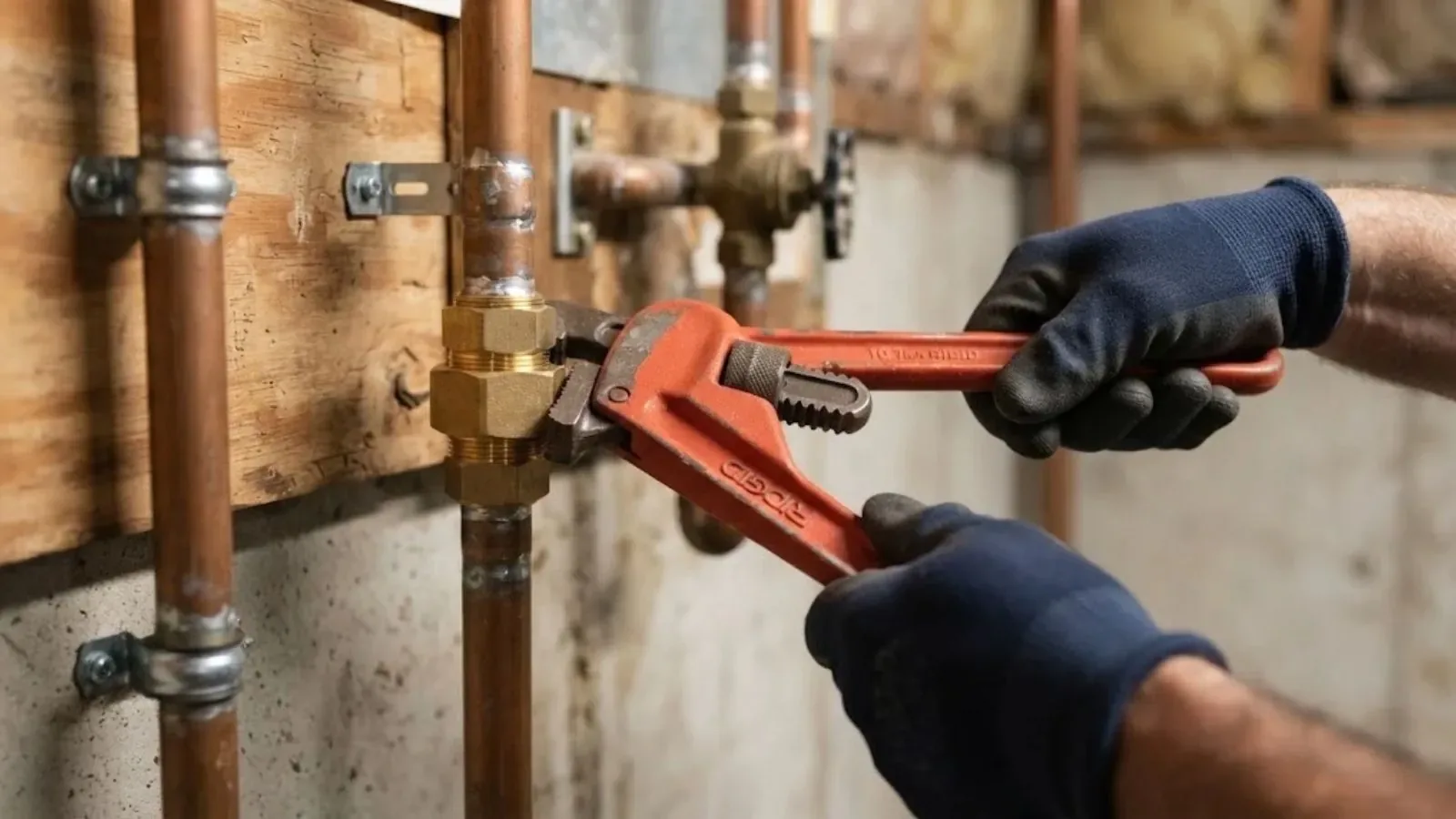
Installation work adds something new to the plumbing system: a sink, a shower, a toilet, a dishwasher, a gas range, an outdoor spigot or a whole bathroom. The plumber plans the supply and drain lines, sets the fixture and tests the connections.
It differs from repair because the work changes the system, which is why it needs a permit and an inspection. For water heater jobs, see water heater installation, and for a softener, water softener installation.
Common installation projects
| Project | What is involved |
|---|---|
| New sink, faucet or toilet | Supply stops, drain connection and a leak test |
| Bathroom or kitchen remodel | Rough-in moves, new supply and drain lines |
| Dishwasher, ice maker or washer hookup | Supply, drain and air gap or standpipe |
| Gas range, dryer or fireplace line | Gas piping, shutoff and a pressure test |
| Outdoor spigot or irrigation hookup | Frost-proof spigot, backflow device |
| Basement bathroom | Ejector pump or below-grade drain work |
Gas smell: leave first, then call
If you smell gas, do not turn on lights, switch anything on or off or use a phone inside. Leave the building, then call 911 and your gas utility from outside.
Do not call a plumber from inside the building. After the utility says it is safe, a licensed plumber can inspect the lines and repair or install the appliance connection.
Gas appliance connections
Connecting a gas range, dryer, water heater or fireplace means working with flammable fuel. The plumber uses approved pipe and a shutoff valve at the appliance, tests every joint and checks for leaks before the gas is turned on.
Never move a gas appliance yourself, even a short distance. A flex line that is kinked or the wrong size can leak, and the failure may be invisible until it is dangerous.
Have a project in mind?
Call and a plumber will talk through the plan and give a clear price before work starts.
Backflow devices and testing
A backflow device keeps water that has left your plumbing from flowing back into the drinking supply. Irrigation systems and some commercial setups are the usual places they are required.
The City of Caldwell requires backflow assemblies to be tested every year at the owner's expense, and the city keeps a list of approved testers. Contact the water department at 208-455-3070, option 2, or backflow@cityofcaldwell.org, for the list and the current rules.
Irrigation hookups and seasonal shutdown
Many homes in Caldwell are served by pressurized irrigation run by the Caldwell Municipal Irrigation District, and homes on that service cannot use city drinking water for irrigation. The pumps typically start in mid to late April and shut off in early to mid October.
Sprinkler lines should be blown out with compressed air at season end to avoid freeze damage. A plumber can add a frost-proof hose bib, a backflow assembly or a new irrigation tie-in to the right supply.
What changes the price of an installation
Installation is priced by the scope. You get the price before work begins.
If you are buying the fixture yourself, send the model number first so the plumber can check the rough-in size.
Permits and inspections in Caldwell
The Idaho Division of Occupational and Professional Licenses states that a permit is required when any plumbing work is performed, and that a local building permit does not replace it. Homeowners may permit work on their own primary or secondary residence, and a permit expires after 365 days.
Idaho's state plumbing code is the 2015 Uniform Plumbing Code with Idaho amendments. The City of Caldwell Building Safety Division takes plumbing permit applications online, its inspection line is (208) 455-4605 and same-day inspection requests are taken by 7:00 a.m. DOPL licenses plumbers as apprentices, journeymen and contractors, and its online search lets you verify a license.
Commercial installs, such as a restaurant dish pit, are covered under commercial plumbing, and installation visits are also offered in Middleton.
Every installation above follows the 2015 Uniform Plumbing Code (UPC) with Idaho amendments in IDAPA 24.39.20, and the permit and inspection are part of the job.
Source: Idaho DOPL Plumbing Bureau FAQ and the City of Caldwell Building Safety Division
How an installation runs
Plan
The plumber reviews the layout, the fixture and the code needs.
Permit
The permit is pulled and the inspection is arranged.
Install
Supply and drain lines are run and the fixture is set.
Test and inspect
The system is pressure tested, inspected and handed over.
Plumbing installation questions in Caldwell
A like-for-like swap is treated differently from new work, so ask the plumber. Idaho states that a permit is required when plumbing work is performed.
Idaho lets homeowners permit work on their own primary or secondary residence, but the work must meet code and be inspected.
Use the Idaho DOPL online license search. Ask the plumber for the license number and check it matches.
An approved tester from the City of Caldwell's list. Tests are due yearly, and the owner pays.
Before the first hard freeze. The irrigation district's pumps typically shut off in early to mid October, which is a good prompt.
Leave the building, call 911 and your gas utility from outside, and do not use a switch or phone inside. A plumber can help once the utility says it is safe.