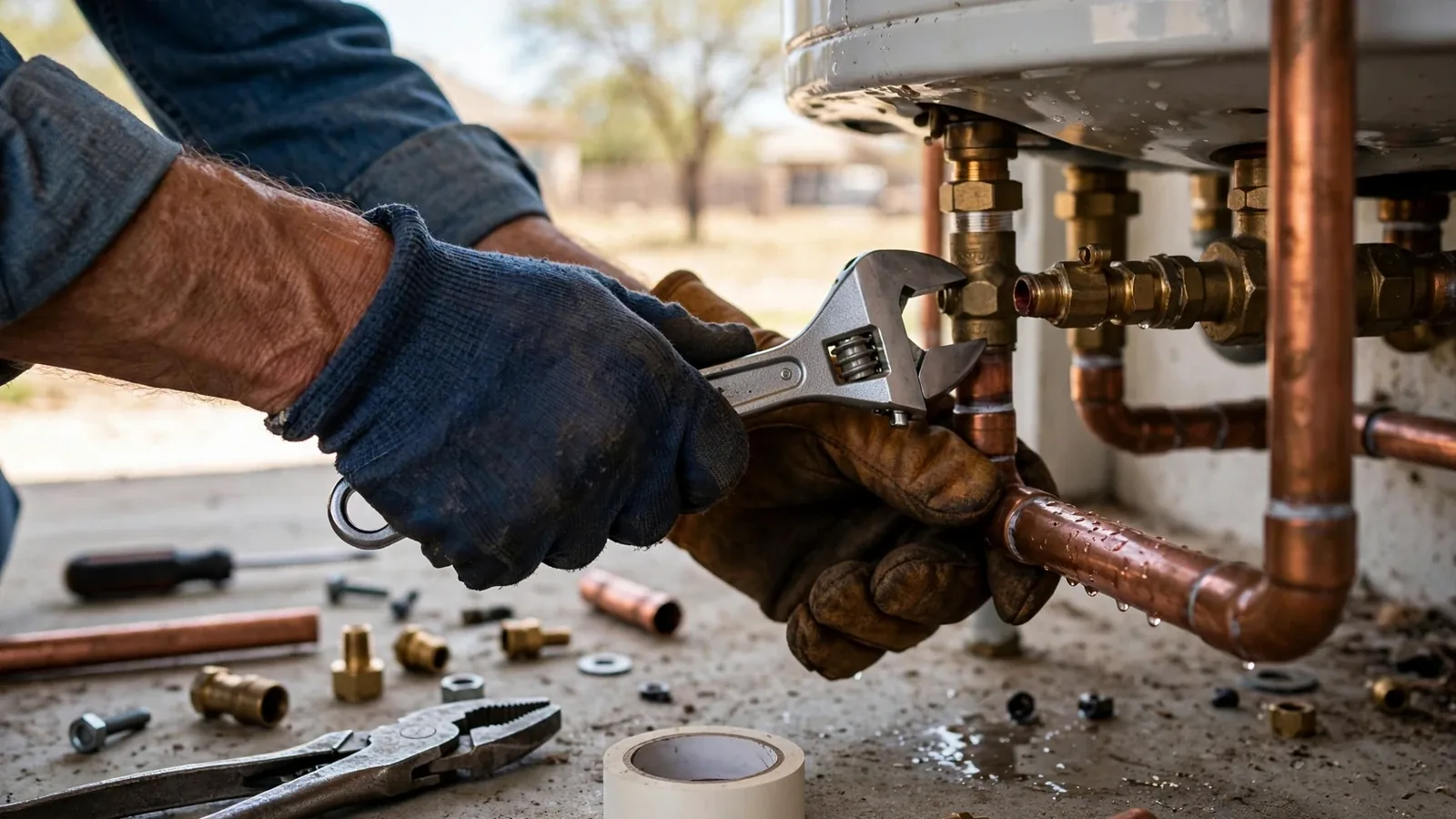
What a water heater installation includes
A water heater installation sets a new unit where none existed, or moves an existing heater to a better spot. It covers the supply and return lines, shutoff valves, relief valve and discharge pipe, venting or electrical hookup, and the expansion tank where the system calls for one.
This page is for planned work such as a remodel, a fuel switch, a new garage heater or a home addition. If a tank is flooding the floor right now, go to emergency water heater replacement instead.
Pick the right type for the house
| Type | Best for | Watch for |
|---|---|---|
| Standard tank, gas | Homes with gas lines and a vented closet or garage | Needs combustion air and a clear flue |
| Standard tank, electric | Homes without gas | Needs a dedicated 240 volt circuit |
| Hybrid heat pump | Low electric bills with open floor space | Needs air volume, a drain and about 7 to 8 feet of clearance |
| Tankless gas or electric | Saving floor space and long showers | Needs venting, a gas line check or heavy electrical service |
Sizing the heater for your household
A 40 gallon tank suits a household of two or three, while a 50 gallon unit is the usual choice for four people or a home with a soaking tub. Tankless sizing depends on flow in gallons per minute and on how cold the incoming water runs in winter.
The plumber asks how many bathrooms you have, how many people shower at the same time, and whether a dishwasher and washer run in the evening. Those answers set the size faster than square footage does.
Where the heater goes matters in Idaho winters
Many Caldwell homes keep the heater in an attached garage. NOAA's 1991 to 2020 normals for the Nampa station show an average January low near 23 degrees F and about 132 days a year at or below freezing. A garage heater needs insulated pipes, a drain pan with a drain line and a clear path for the vent.
A heater moved inside the thermal envelope costs a little more to plumb but reduces standby loss and removes the freeze risk. The plumber walks the options with you before the quote.
What drives an installation quote
The final number depends on the unit and on what the house needs around it. You get the price before work starts.
Rebates change often. Intermountain Gas lists a residential tankless rebate with a minimum 0.91 UEF efficiency rating and a 90 day application window after install, but check current terms before you buy.
Ready to schedule an install?
Call and the dispatcher will book a visit, with same-day appointments offered when they are available.
Permits, inspections and licensing in Caldwell
Idaho's Division of Occupational and Professional Licenses says a permit is required when plumbing work is performed, and it adds that a local building permit does not replace the state plumbing permit. The state plumbing code is the 2015 Uniform Plumbing Code with Idaho amendments. Ask the plumber who pulls the permit and when the inspection is scheduled.
The City of Caldwell Building Safety Division handles building permits and takes same-day inspection requests made by 7:00 a.m. You can check any plumber's license on the state's online license search, which lists apprentice, journeyman and contractor categories.
A tank that fails before the install date is handled as water heater replacement, and installs are also scheduled in Middleton.
Source: Idaho DOPL Plumbing Bureau and the City of Caldwell Building Safety Division
Gas safety belongs in every install
A gas heater adds a gas line, a shutoff, a sediment trap and a vent. If you ever smell gas during or after an install, leave the building, call 911 and your gas utility, and stay out until it is cleared.
The plumber leak-tests every gas connection before the unit is fired, and shows you where the manual shutoff is. The same discipline applies to carbon monoxide: a working detector near the heater is cheap insurance.
How the install day goes
Site check
The plumber confirms size, vent route, gas or electric supply and access.
Set and connect
The old unit comes out if there is one, and the new heater is set and piped.
Vent and fuel
The vent, gas or electrical connection is made and leak-tested.
Fire up and walk-through
The heater is started, checked and explained, with the permit inspection booked.
After the install: the care that makes a heater last
Flush a tank heater once a year to clear sediment, and check the anode rod every two to three years. Test the relief valve every year by lifting the lever briefly with a bucket under the discharge pipe.
If a leak ever develops, close the cold valve, cut the power or gas, and use the 24/7 line. The repair page lists what the plumber checks first.
Water heater installation questions in Caldwell
A like-for-like tank swap usually takes a half day, and a new location, fuel switch or tankless install takes longer. The dispatcher gives you a window when you book.
Yes, though the cost depends on how far pipes, vent and gas or electric lines must run. A walk-through is the fastest way to a firm number.
Expansion tanks are called for in closed systems, often where a pressure regulator or check valve is on the supply. The plumber checks your system and adds one where code requires it.
A 50 gallon tank is the usual fit for four people, and tankless needs a flow rate match. The plumber tests before recommending a size.
Yes, haul-away of the old unit is part of the install quote.
It can be, if the garage stays above about 40 degrees F and has enough open air space. In an unheated garage on cold nights, a standard tank is often the safer pick.