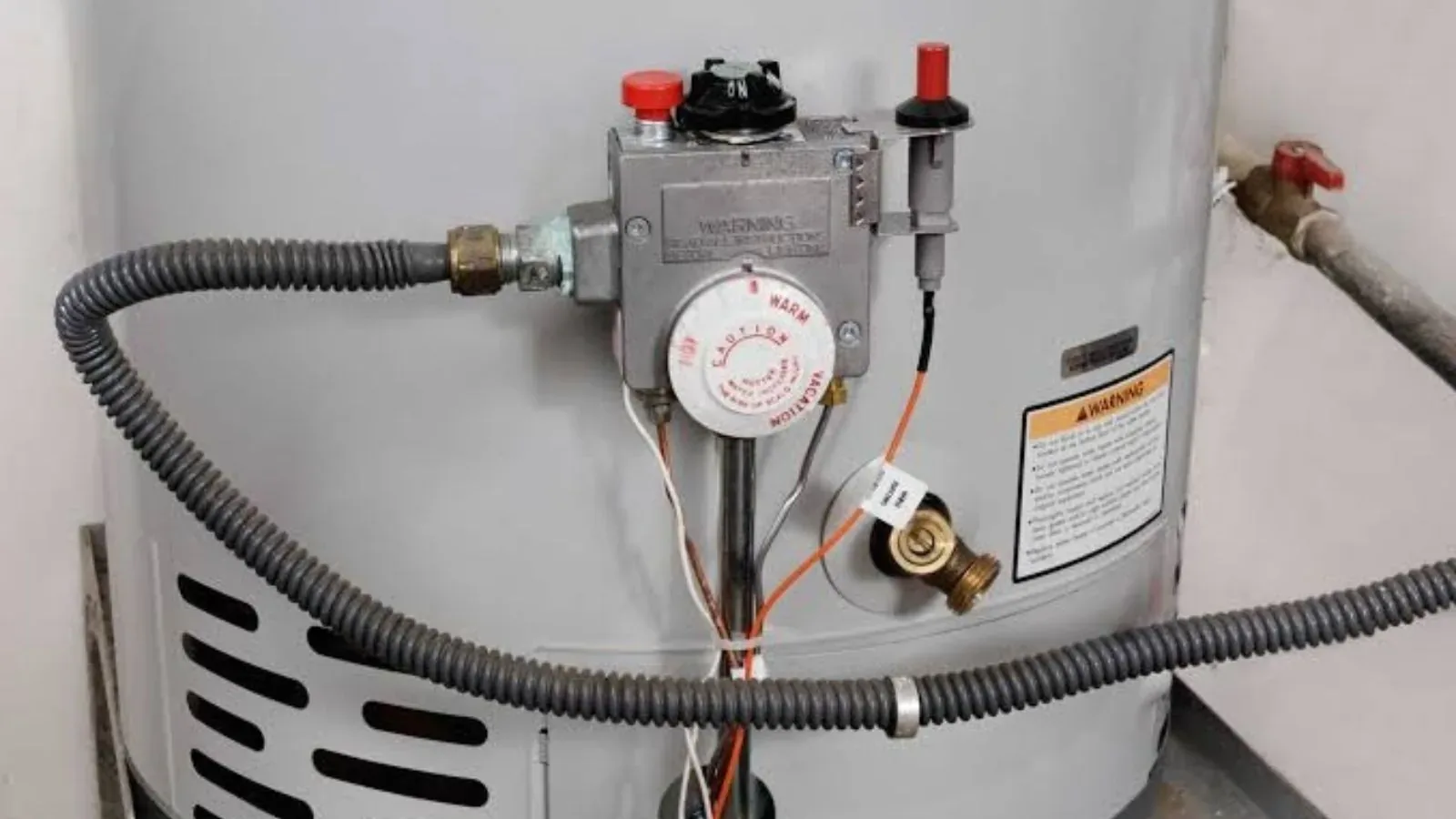
What the pressure switch does
A power-vent heater uses a fan to push exhaust gas through a plastic vent pipe. A small diaphragm switch, connected by a thin tube to the blower housing, closes when the fan creates enough draft.
If the switch does not close, the control board treats the vent as unsafe and keeps the gas valve shut. That is a safety feature, not a defect, and it is why the heater does nothing even though the pilot light or igniter seems fine.
Symptoms and likely causes
| What you see | Likely cause | Next step |
|---|---|---|
| No heat, blower runs, no flame | Switch stuck open or tube clogged | Plumber tests the switch and tube |
| Error code about vent or pressure | Blocked vent or condensate trap | Plumber checks vent and drain |
| Heater lights, then shuts off | Weak blower or partly blocked vent | Plumber tests draft |
| Water in the tube | Condensation from the vent | Clear the tube, fix the slope |
| Clicking with no ignition | Control or igniter fault | Plumber diagnoses |
What to do about a gas smell or fumes
If you smell gas or exhaust, leave the building at once. Call 911 and your gas utility from outside, and do not turn anything on or off inside.
Never bypass a pressure switch. It exists to stop the burner when exhaust cannot leave the house, and a jumper wire can put carbon monoxide into the living space.
Heater not firing?
Call and a plumber will find out whether it is the switch, the vent or the blower, and give a price first.
A different switch on a well
Homeowners also see a pressure switch on a private well pump, which turns the pump on when the household water pressure falls. It is a separate part with a different job, and it is not the part that stops a water heater from lighting.
Some rural addresses around Caldwell are on private wells rather than city water, so ask the dispatcher which kind of switch your problem involves. A water heater relief valve is a third part again, and it opens to release pressure when a tank gets too hot.
Caldwell homes, garages and permits
The Census Bureau's 2020 to 2024 estimates show that about 56 percent of Caldwell homes were built in 2000 or later, and many of those use power-vent or direct-vent heaters tucked into garages and utility closets. The vent run and the condensate drain are the first things a plumber checks when a switch trips.
Idaho says a permit is required when plumbing work is performed, and a local building permit does not replace it. For gas appliance work, ask the plumber how the permit and inspection will be handled, and the City of Caldwell Building Safety Division can be reached at (208) 455-3024.
The service area page lists the towns where this repair is offered, and a heater that cannot be saved is covered under water heater installation.
Gas appliance and vent repairs fall under Idaho's adopted 2015 Uniform Plumbing Code (UPC).
Source: U.S. Census Bureau ACS 2020 to 2024, Idaho DOPL Plumbing Bureau FAQ and the City of Caldwell Building Safety Division
Repair or replace the heater
A pressure switch is a low cost part on a heater that is otherwise sound. If the heater is more than 10 or 12 years old, or the tank has started to leak, a replacement is a better use of money. See water heater replacement when the unit is past repair.
A tank that is working but old can be a good time to add a drip pan, a new relief valve and a new vent. Ask the plumber what the inspection will look at.
What to tell the dispatcher
Give the model name, the age of the heater and any error code on the display. Say when it stopped working and whether the vent pipe or the garage got hot, cold or wet.
Those details let the plumber bring the right switch, tubing and vent parts on the first visit, and they shorten the time you spend without hot water.
Carbon monoxide alarms matter
Any home with a gas appliance should have working carbon monoxide alarms on every level and near sleeping areas. Test them monthly and replace them on the schedule the maker lists.
If an alarm sounds, get everyone out, call 911 and wait for the all-clear before going back in. Do not try to troubleshoot a gas heater while the alarm is sounding.
Signs the vent is the real problem
Soot or discoloration near the vent
Exhaust is not leaving the building cleanly.
A plastic vent that sags
Water collects in a low spot and blocks the draft.
A bird nest or debris at the termination
The vent outlet is partly blocked.
Repeated lockouts in cold weather
Frost or condensate can restrict the vent.
A carbon monoxide alarm
Treat it as an emergency and leave the house.
A burning smell near the heater
Shut off the unit and call.
Questions Caldwell homeowners ask
The pressure switch may not be closing because of a blocked vent, a weak blower, a clogged tube or a failed switch. A plumber tests each.
No. The switch protects you from exhaust gas. A bypass can fill a home with carbon monoxide.
Often under an hour once the part is on hand. A vent or blower problem adds time.
Idaho states that a permit is required when plumbing work is performed. Ask the plumber whether the repair falls under it, and the City of Caldwell Building Safety Division at (208) 455-3024 can answer permit questions.
No. The relief valve opens to release pressure from the tank, and the pressure switch proves the vent is working.
Yes. See the page for Middleton and give your address to the dispatcher.