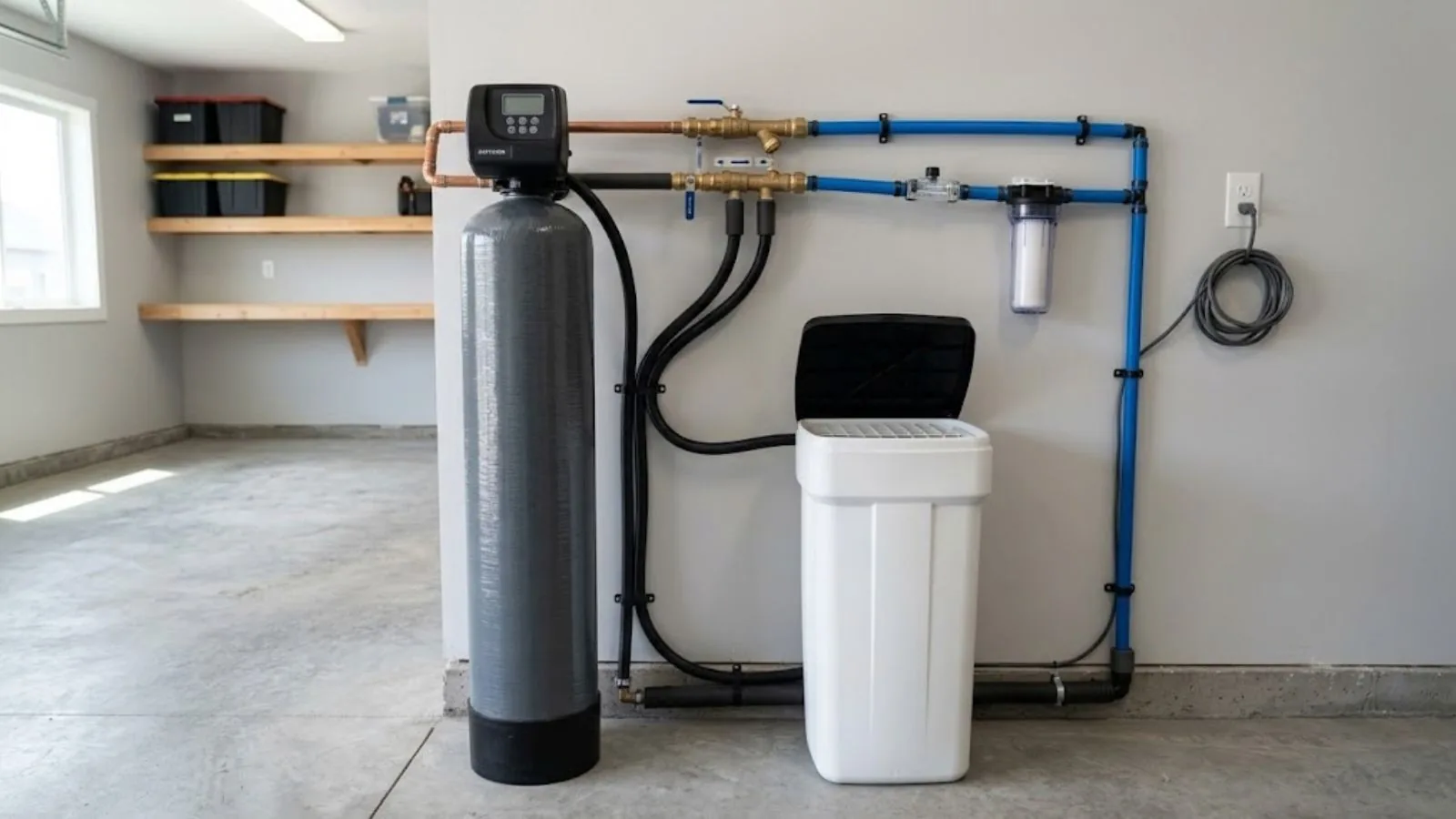
What you pay for
The unit itself is the largest piece, and its price grows with the capacity of the resin tank. Labor covers cutting into the main line, installing a bypass valve, running a drain line and connecting power.
Some homes need extra plumbing, such as a new drain or an air gap, and older houses may need a shutoff valve replaced before the softener can go in. Those items are listed on the quote before work starts.
Cost factors at a glance
| Factor | Effect on the total |
|---|---|
| Tank capacity | Larger households need larger resin tanks |
| Location | A garage with a nearby drain costs less than a finished basement |
| Bypass and shutoff valves | New valves add parts and labor |
| Drain connection | A long drain run or a new air gap adds work |
| Permit and inspection | Idaho requires a permit for plumbing work |
| Salt and upkeep | A recurring cost after the install |
Want a clear price for your home?
Call and the plumber will talk through size, location and upkeep, then give a price before work starts.
Test before you buy
Hardness varies by tap and by water source. A low cost test kit or a lab test gives you a number for your own water, and that number lets the plumber size the unit instead of guessing.
Hard water scale hurts water heaters and fixtures, so water heater repair calls often start with scale. A softener helps prevent it, but only if the unit is the right size.
What the City of Caldwell publishes about hardness
The City of Caldwell water department supplies drinking water from groundwater wells and publishes an annual water quality report. Several recent reports, including those for 2022, 2024 and 2025, do not list a hardness figure, so ask the department at 208-455-3070 or test your own tap.
Some Caldwell homes use pressurized irrigation from the Caldwell Municipal Irrigation District, which is separate from the drinking water line. A softener belongs on the drinking water line only. Idaho says a permit is required when plumbing work is performed, and the City of Caldwell Building Safety Division takes plumbing permit applications online.
Source: City of Caldwell Water Department annual reports, Caldwell Municipal Irrigation District and Idaho DOPL Plumbing Bureau FAQ
Upkeep after the install
A softener uses salt, water and a small amount of electricity. Plan to add salt every few weeks, and check the brine tank for a hard crust called a salt bridge, which blocks the cycle.
Once or twice a year, a plumber can check the settings, sanitize the resin bed and test the bypass. Skipping that step is how a softener ends up delivering hard water without anyone noticing.
How a plumber sizes a softener
Sizing starts with two numbers: the hardness of your water and the amount of water your household uses. Multiply them and you get the mineral load the resin has to remove each day, and the plumber picks a tank that handles several days of load between recharges.
A unit that is too small recharges too often and wastes salt and water. One that is too large can leave water sitting in the resin, so the sizing conversation matters as much as the brand.
Salt, potassium and alternatives
Most softeners use sodium chloride salt. Potassium chloride is an option for people who want to avoid extra sodium, though it costs more per bag.
Salt-free conditioners change how minerals form scale and do not truly soften the water. They can reduce scale in some cases, but they will not give the soft feel and the soap savings that a true ion exchange unit provides.
Where the money goes over time
The install is a one-time cost, but salt, water and the occasional service visit continue for the life of the unit. A household that adds salt every few weeks should budget for it as a regular item.
Ask the plumber for the expected salt use per month and the amount of water a recharge uses. Those figures turn the install quote into a real yearly cost and let you compare two units fairly.
Signs a softener may help
White crust on faucets and showerheads
Mineral scale builds where water dries.
Spots on dishes and glass
Minerals stay behind as water evaporates.
A water heater that rumbles
Scale on the bottom of the tank traps heat.
Soap that does not lather
Hard water reduces soap performance.
Reduced flow from fixtures
Scale narrows aerators and showerheads.
Short appliance life
Scale shortens the life of heaters and dishwashers.
Questions Caldwell homeowners ask
Several recent annual reports, including the ones for 2022, 2024 and 2025, do not list a hardness figure. Call the water department at 208-455-3070 or test your own tap.
A standard install takes a few hours, and the water is off for part of that time.
It contains a little sodium or potassium. People on low sodium diets should ask a doctor, and many homes keep one tap unsoftened.
No. It belongs on the drinking water line only.
No. A softener removes hardness minerals, and filters remove sediment and chemicals. Some homes use both.
Yes. See the page for Middleton and the service area page.