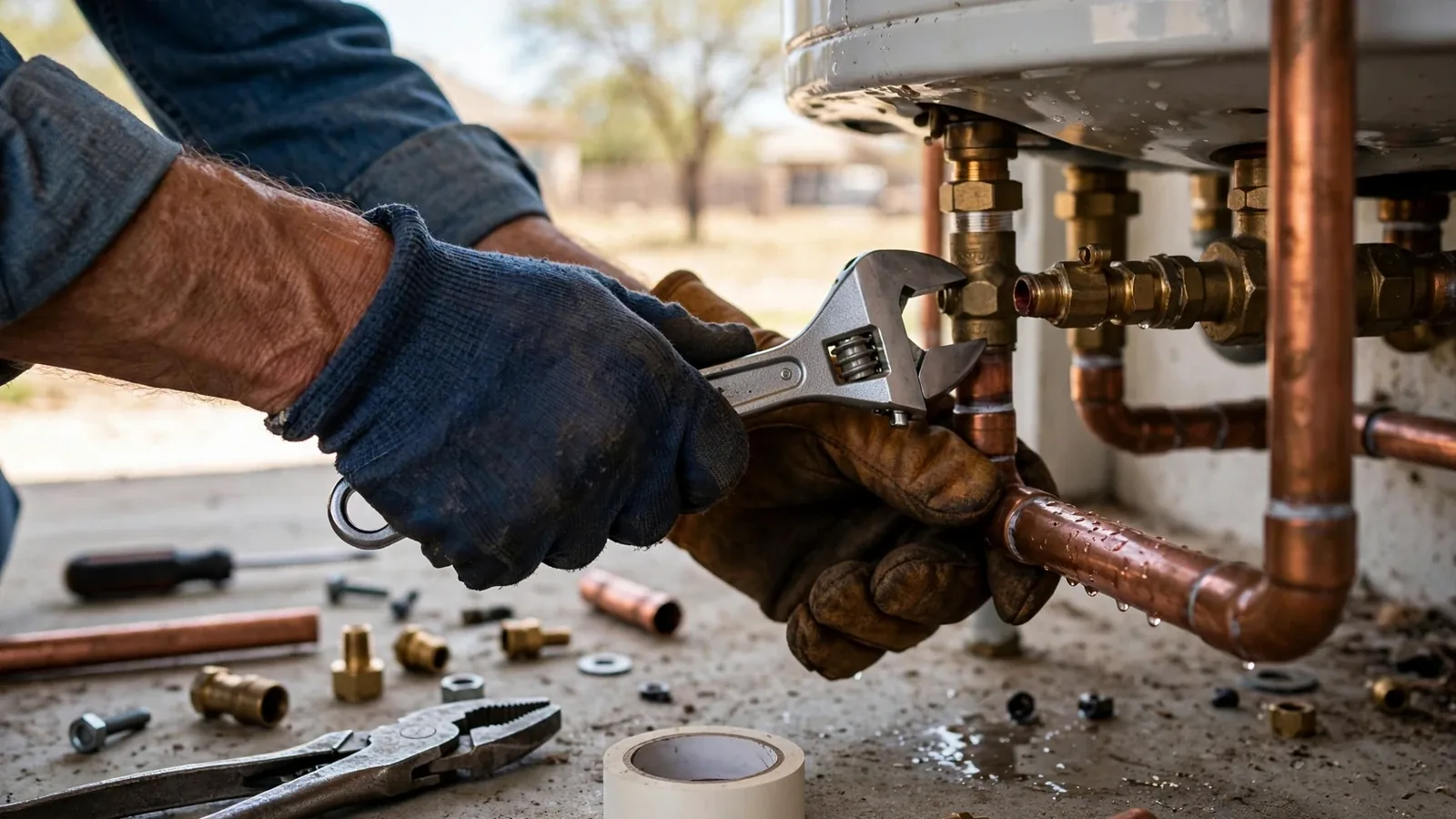
What install day looks like
Drain and disconnect
The old tank is shut off, drained and unhooked from the water and fuel lines.
Set the new unit
The tank goes in a drain pan with fresh connectors and a pressure relief valve.
Connect fuel and vent
Gas lines, venting or electrical connections are made and leak tested.
Fill, test and inspect
The tank is filled, fired and checked, then the inspection is booked.
Choosing between gas, electric and heat pump
The easiest swap is the same fuel as the old tank, because the gas line, vent or electrical circuit is already in place. Changing fuel is possible but adds work, such as a new circuit, a vent or a condensate drain.
A heat pump water heater uses electricity to move heat from the surrounding air and needs open space around it. It works best in a garage or utility room that stays above freezing, so consider the winter lows described below before choosing one.
Fuel types compared
| Type | What the install needs | Worth knowing |
|---|---|---|
| Gas tank | Gas line, vent, drain pan, safety valve | Needs combustion air and a proper vent |
| Electric tank | A dedicated circuit, drain pan, safety valve | No vent, simpler install |
| Heat pump | Electric circuit, air space, condensate drain | Cools the room it sits in |
| Tankless | Larger gas line, vent, often a new circuit | Covered in the tankless water heater page |
Sizing the tank for the household
A common rule of thumb is about 40 gallons for one or two people, 50 gallons for three or four and larger tanks for bigger households. The first hour rating on the label says how much hot water the unit delivers in a busy hour, and it matters as much as tank size.
Tell the plumber how many bathrooms you run at once and whether you have a soaking tub or a dishwasher with a hot water inlet. Those details decide whether a standard tank is enough or a larger unit is worth the extra cost.
Want a clear price for your install?
Call and describe your current tank. The plumber will explain the options and the cost before any work begins.
Caldwell homes, cold garages and permits
The Census Bureau's 2020 to 2024 estimates give Caldwell a median year built of 2003, with about 56 percent of homes built in 2000 or later. A tank installed when the house was new is now more than 20 years old, well past the 8 to 12 years most tanks last, so a failing original unit is a common reason for calls.
NOAA normals for the Nampa station, about 7 miles east, show a January average low near 23 degrees F and about 132 days a year at or below freezing. Water heaters in unheated garages lose heat faster in that weather, and an insulated tank or a location change can help.
Idaho's Division of Occupational and Professional Licenses says a permit is required when plumbing work is performed. The City of Caldwell Building Safety Division handles plumbing permits through its online portal, and same-day inspection requests are taken by 7:00 a.m.
Source: U.S. Census Bureau ACS 2020 to 2024, NOAA 1991 to 2020 normals, Idaho DOPL Plumbing Bureau FAQ and the City of Caldwell Building Safety Division
What to do before the plumber arrives
Clear a path to the tank and move stored items back a few feet. Know where your main water valve and the tank's shutoff are, and tell the plumber about any past leaks or odd noises from the old unit.
If you smell gas at any point, leave the building, then call 911 and your gas utility from outside. A plumber can finish the job once the utility says it is safe. For a failed tank that cannot wait, see water heater replacement.
What a good installation quote lists
A written quote should name the tank size, the fuel, the venting and the connectors, and say who handles the permit and the haul-away of the old unit. If a shutoff valve, expansion tank or drain pan is needed, it should be listed as a line item instead of appearing later as an add-on.
Ask how long the visit will take and when the hot water will be back. A clear answer to those questions tells you the plumber has done this job before and planned it before arriving.
Signs the old tank is ready to be replaced
Rust colored hot water
Corrosion inside the tank is shedding into the water.
Rumbling or popping noises
Sediment has hardened on the bottom of the tank.
Water around the base
A leak from the tank itself cannot be repaired.
Not enough hot water
A failed element or heavy scale cuts capacity.
A tank over 12 years old
Even a tank that works is at the end of its normal life.
Repeated repair calls
Parts costs add up on an aging unit.
Questions Caldwell homeowners ask
Idaho states that a permit is required when plumbing work is performed, and a local building permit does not replace it. The City of Caldwell Building Safety Division takes plumbing permit applications online, so ask the plumber who pulls the permit and when the inspection will be booked.
Most installs take half a day to a full day. A fuel change or a relocation takes longer.
Usually yes. The plumber replaces connectors, the pressure relief valve and the discharge pipe, and adds an expansion tank where the system needs one.
Idaho lets homeowners permit work on their own primary or secondary residence, but gas, venting and electrical work carry real risk, and an inspection is still required.
Yes. The plumbers also work in Middleton and nearby Canyon County towns. See the service area page for details.
The plumber hauls it away for recycling unless you say otherwise.